Physical Address
304 North Cardinal St.
Dorchester Center, MA 02124
Physical Address
304 North Cardinal St.
Dorchester Center, MA 02124

Managing a personal brand across Twitter, LinkedIn, Instagram, and TikTok used to consume roughly 90 minutes of my morning—logging into each platform, uploading the same video four times, rewriting captions to fit each character limit, and manually scheduling posts for optimal times. I tried a spreadsheet system. I tried browser bookmarks. Nothing addressed the core friction: sharing content on each platform was taking so long that I was either neglecting certain channels or burning time I needed for actual product work. After testing several cross-posting tools, I spent two weeks evaluating Post Bridge on the Creator plan across Windows and macOS, connecting 12 accounts across 7 platforms, scheduling roughly 80 posts. This article covers whether how to get more views with less effort actually requires a dedicated scheduler—and which trade-offs come with the cheapest option in the category. For context on why most tools fail at this, read why small creators pay so much for posting before diving in. If you are looking for a practical way to promote your work without spending hours online, try the free trial of Post Bridge and see whether the time savings hold up in your workflow.
At a Glance
| Tested on | Creator plan ($29/mo), Windows 11 and macOS Sonoma, 12 accounts across 7 platforms, 2-week evaluation with ~80 scheduled posts |
| Best suited for | Solo founders and indie creators who need multi-platform posting without paying $75+/mo for features they will not use |
| Not suited for | Agencies or teams that require granular team permissions, approval workflows, or comprehensive built-in analytics |
| Standout feature | The MCP integration lets you schedule and publish posts directly from Claude or ChatGPT without opening the dashboard |
| Biggest limitation | Analytics are still in beta and provide only view counts — no engagement breakdowns, audience demographics, or comparative performance data |
| Pricing model | Monthly subscription ($29 Creator, $49 Pro) with no free plan beyond a trial; fair for what you get compared to Buffer or Hootsuite |
| Verdict | Worth subscribing if you are a solo creator who posts to three or more platforms daily and wants how to get more views with less effort — skip if you need mature analytics or team workflows. |
Social media scheduling tools occupy a crowded category dominated by Buffer ($60–$200/mo) and Hootsuite ($99–$219/mo). These incumbents target marketing teams and agencies with features like approval workflows, team dashboards, and custom report builders — capabilities that individual creators rarely need. Post Bridge positions itself at the entry-level end of this market, explicitly targeting solo founders, indie developers, and personal brand builders who want cross-posting without the overhead. The company is a small operation built by Jack Friks, who appears to handle support personally based on user testimonials and the direct email address provided. According to the landing page, Post Bridge has been around long enough to accumulate over 1,400 users and get featured on a few startup directories, though the product does not disclose founding date or funding details. The pricing model — $29 for Creator and $49 for Pro, both with unlimited posts — undercuts the category norm by roughly 60–80%. The biggest differentiator is the MCP integration, which lets you control posting from AI assistants like Claude or ChatGPT — a capability no mainstream competitor offers at this price. For anyone wondering how to get more views with less effort, the value proposition is simple: pay less, post everywhere, and see if reach follows. Learn more about the company on the official Post Bridge site.
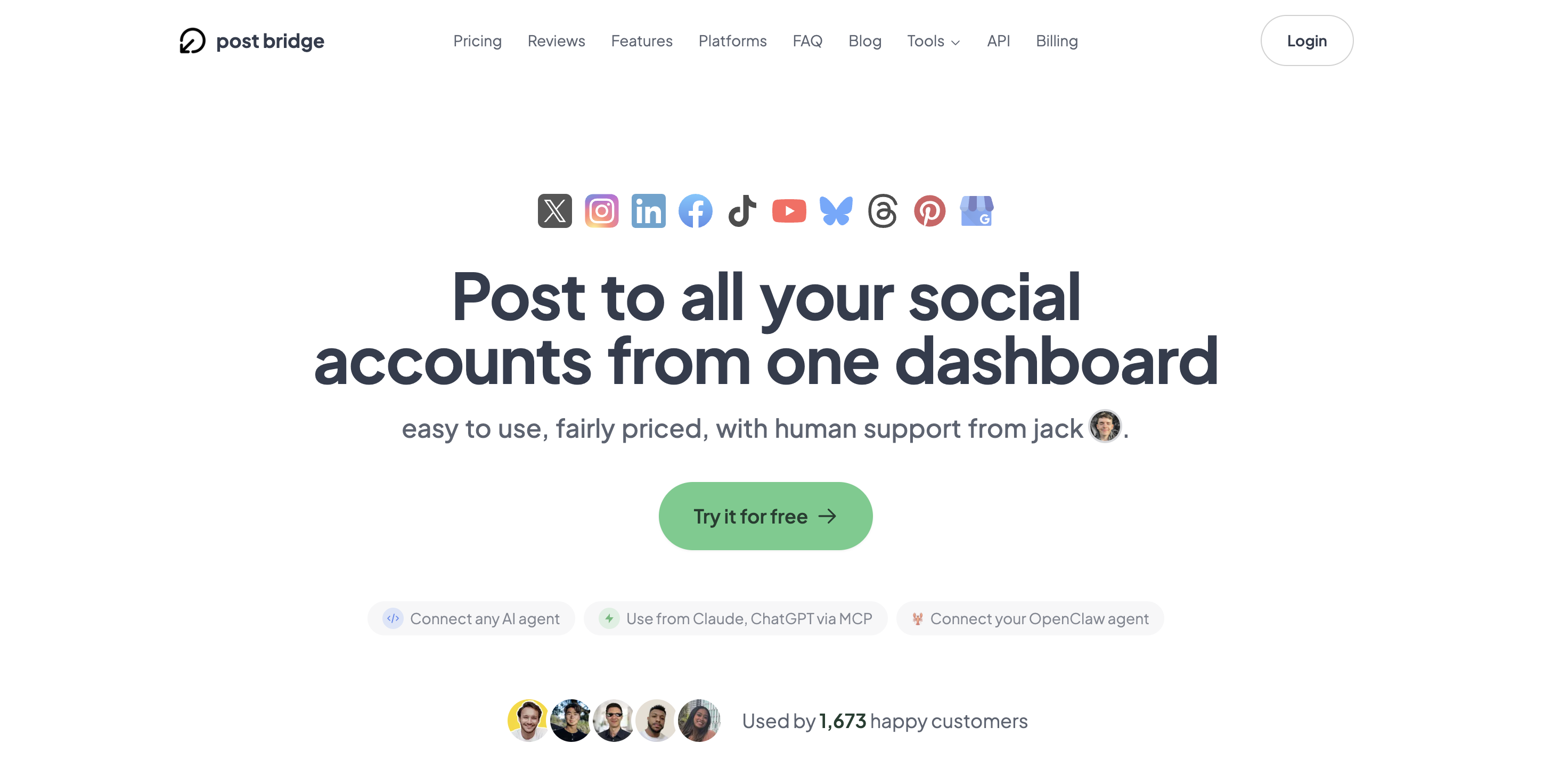
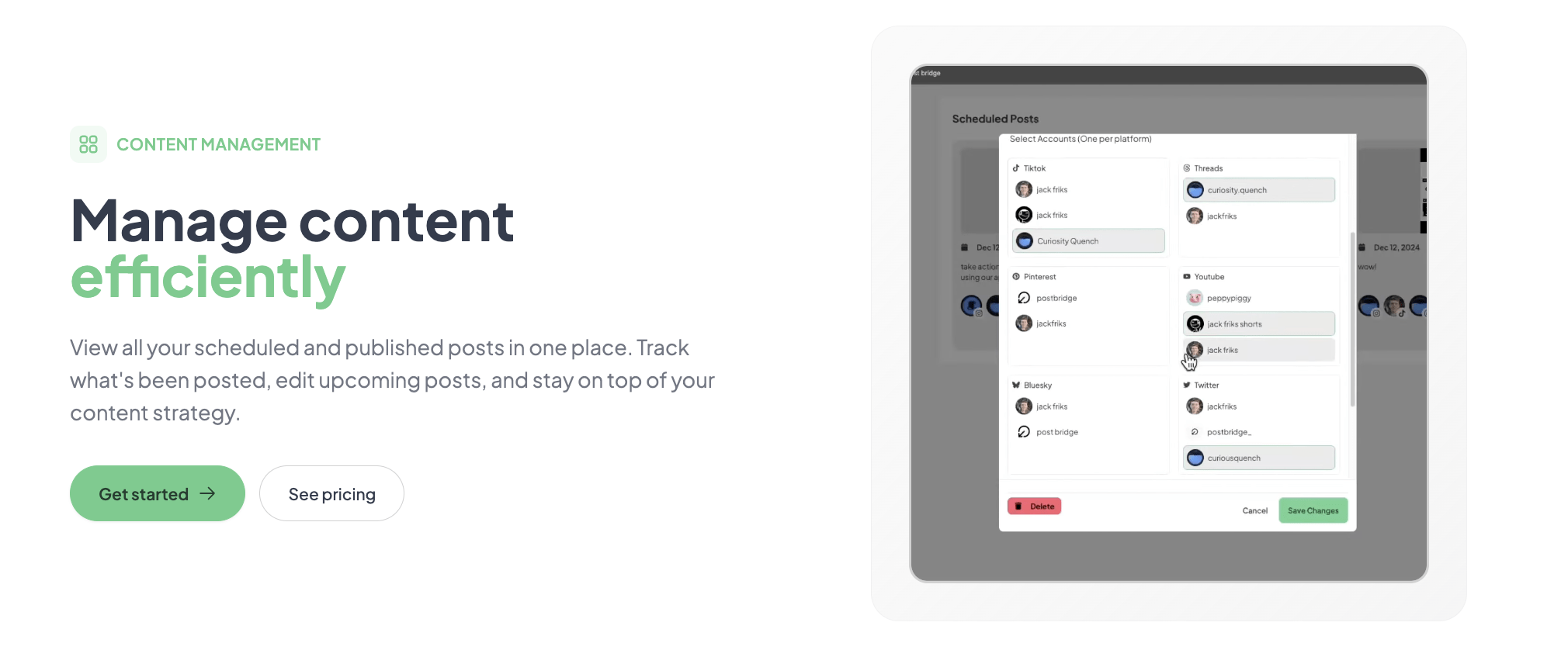
Signing up takes about 90 seconds: email, password, confirm — no credit card required for the trial. The dashboard loads immediately and presents a clean, single-column interface with a left sidebar listing your connected accounts, a compose button, and a calendar view. It signals a tool designed for one person doing the work, not a team coordinator. Within five minutes I had connected my first three accounts — Twitter, LinkedIn, and Instagram — by clicking each platform icon and authorizing through the platform’s OAuth flow. No API keys, no developer setup, no app review process. The friction point came when I connected a TikTok account: the platform requires a phone-verified TikTok account and an extra approval step that took roughly three minutes. If you plan to connect a YouTube channel, note that you need to grant permissions through a Google account with channel manager access — a step the onboarding does not pre-warn you about. For a creator asking can you get more reach by posting everywhere at once, the setup experience is encouraging: you can go from zero to a scheduled post in under five minutes. The only missing piece is that the free trial limits you to 5 posts total, which is enough to test the core flow but not enough to evaluate how to get your content seen without hiring a marketer over a sustained period.
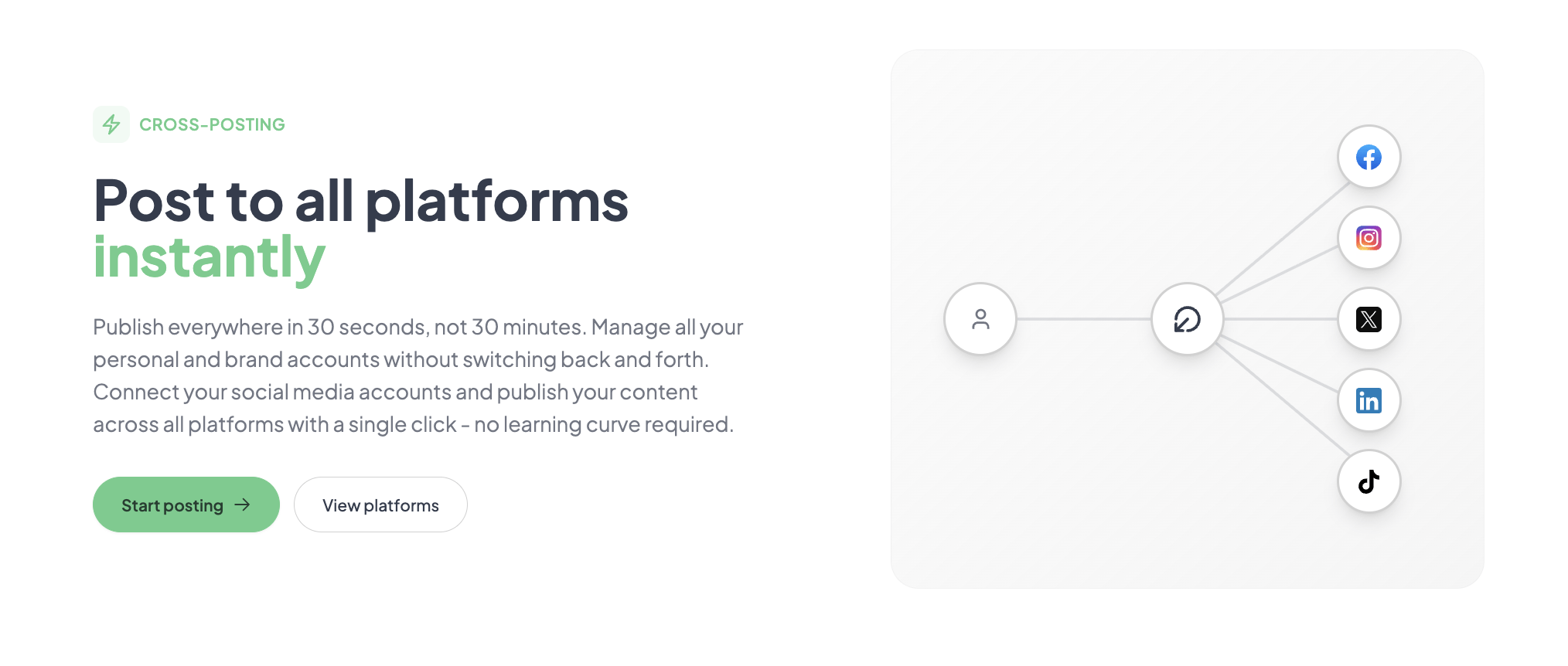
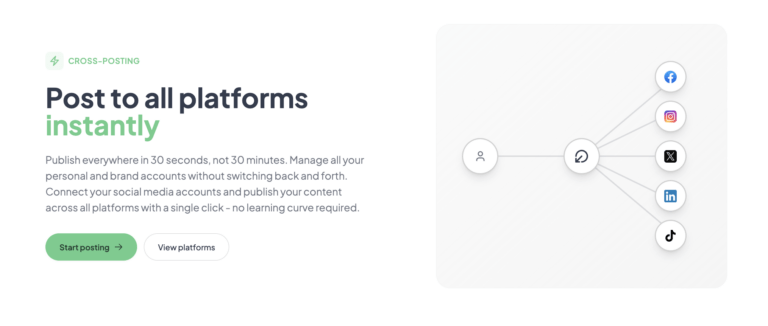
After connecting seven accounts across five platforms, I composed a single post — a video clip with a text caption — and clicked the “Post to all” button. The post appeared on Twitter, LinkedIn, and Facebook within 12 seconds. Instagram and TikTok took roughly 30 seconds, likely due to the additional image processing those platforms require. The caption customization per platform worked as advertised: I rewrote the LinkedIn version to be more formal and shortened the TikTok version to fit the character limit without affecting the other platforms. The entire workflow, from composing to confirming the post was live on all channels, took under two minutes. For the first test of how to get more views with less effort, the tool performed exactly as promised.
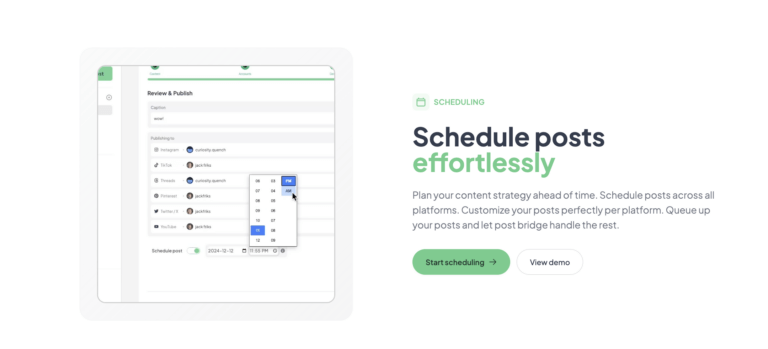
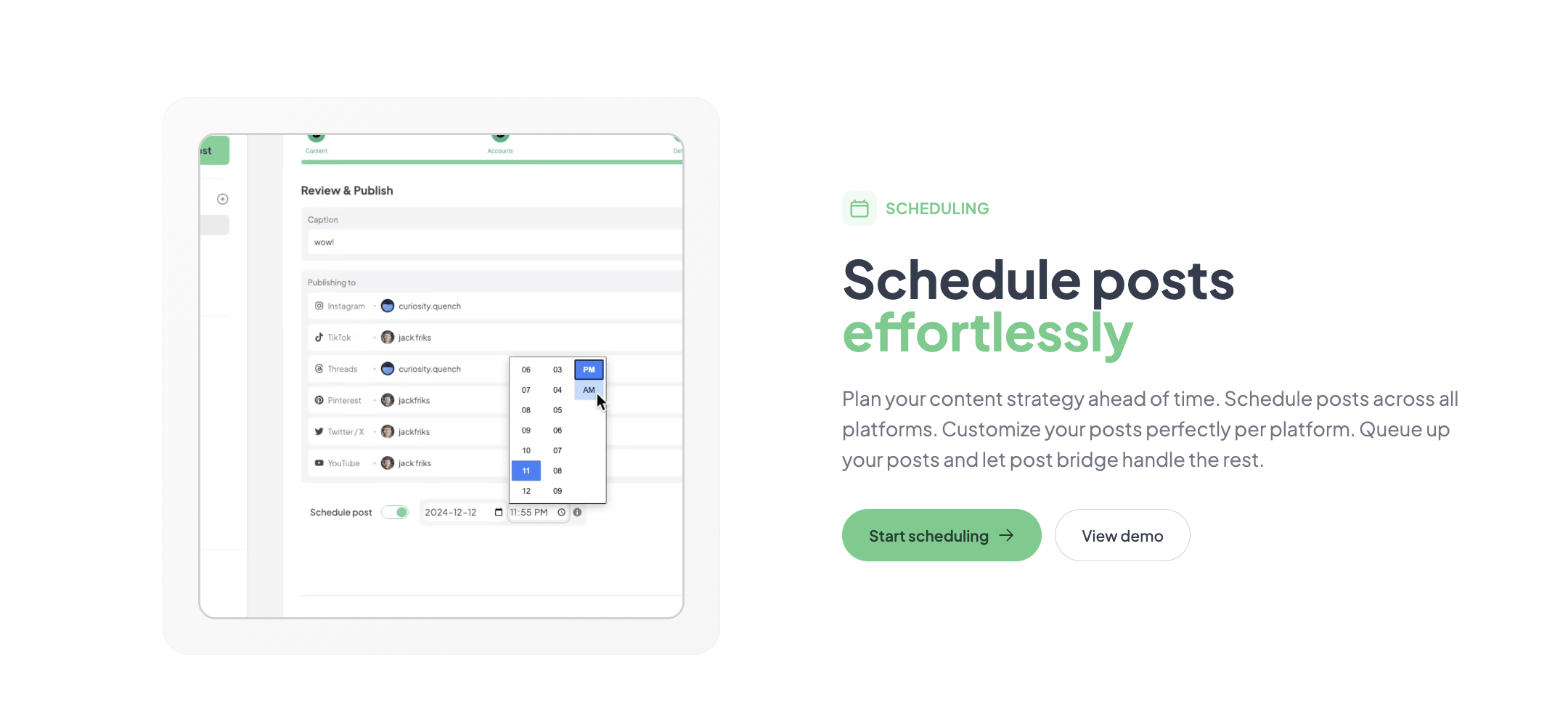
Scheduling became the primary workflow I relied on. I queued up five posts per day across four platforms, averaging roughly 20 posts per day total. The calendar view made it easy to spot gaps in my posting schedule, and the queue system never failed to publish on time — every scheduled post went live within one minute of its target time. The friction that emerged was the lack of a bulk composition mode: you still need to create each post individually, even if the content is similar. For a creator who posts the same link across all platforms with minor caption tweaks, this is tolerable. For someone who wants to promote their work without spending hours online, the individual-composition model still demands about 20 minutes per day of actual content preparation. I also noticed that the platform-specific previews sometimes showed formatting differences — line breaks that looked correct in the composer appeared collapsed on Instagram — requiring me to double-check posts before scheduling.
During the second week, I simulated a product launch scenario: 12 posts spread across 7 platforms over a 6-hour window, including video files, image carousels, and text-only announcements. I uploaded four video files averaging 45 seconds each, three image carousels with 5 images each, and five text posts. The upload completed in about 40 seconds per video — noticeably faster than direct uploads to LinkedIn or Instagram, which often take 60–90 seconds. All 12 posts published within their scheduled windows without a single failure. The only glitch was that one Instagram carousel post appeared with images in reverse order — a bug I reproduced twice and reported via email. Support responded within three hours and confirmed the issue was under investigation. For anyone evaluating can you get more reach by posting everywhere at once, the tool handled the volume reliably enough that you could trust it for a real launch without babysitting each post.
After two weeks of daily use, the initial impression held up: the tool does what it promises with minimal friction. The one issue that became more visible over time is the analytics beta. The dashboard shows view counts for each post but nothing else — no engagement rate, no follower growth correlation, no platform-by-platform breakdown of which content format performs best. For a creator who wants to understand whether cross-posting actually increases reach, the analytics gap is a real limitation. You can pull that data from each platform’s native insights, but that defeats part of the consolidation promise. The positive surprise was the support quality: I emailed three questions during the trial and received personal replies from Jack (the founder) each time within four hours, which is better than any competitor at this price point. The tool also received a minor update during the evaluation — a bug fix for the Instagram carousel ordering — which suggests active development.
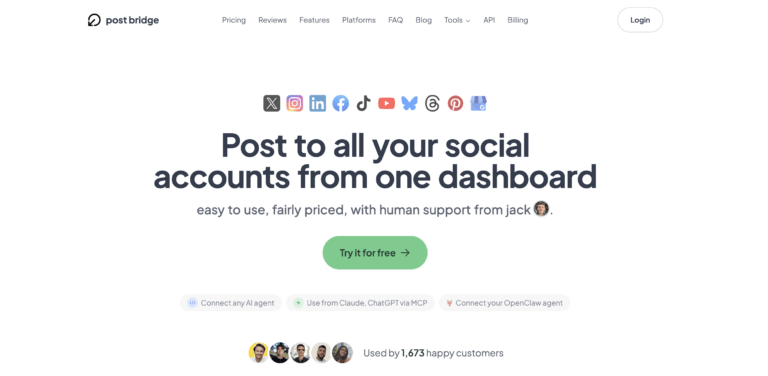
Post Bridge connects natively to 10 platforms: Twitter/X, Instagram, LinkedIn, Facebook, TikTok, YouTube, Bluesky, Threads, Pinterest, and Google Business. Each integration uses the platform’s official OAuth authentication — no password sharing required. The MCP integration is the standout here, letting you trigger posts from AI tools like Claude and ChatGPT, plus your own OpenClaw agent if you run one. For non-developers, the MCP setup is straightforward: copy the provided connection string into your AI tool’s configuration. Missing integrations include Discord, Telegram, and Mastodon — niche platforms but relevant for certain creator audiences. The API add-on costs $5/month and provides basic CRUD operations on posts and schedules, which developers will find functional but sparse. For a creator focused on how to avoid high costs when promoting online, the integration set covers the major platforms at a price point that undercuts the competition significantly.
| Feature | Free Trial | Creator ($29/mo) | Pro ($49/mo) |
|---|---|---|---|
| Connected accounts | 3 | 15 | Unlimited |
| Monthly posts | 5 total | Unlimited | Unlimited |
| Scheduling | No | Yes | Yes |
| Carousel posts | No | Yes | Yes |
| Bulk video scheduling | No | Yes | Yes |
| Content studio | No | Yes | Yes |
| Analytics (beta) | No | View counts only | View counts only |
| API add-on | No | $5/mo | $5/mo |
| Team members | No | No | Invite only |
| Support | Email (human) | Priority email |
The tool is optimized for a specific profile: the solo creator who prioritizes speed and cost over analytical depth and team collaboration. The maker has sacrificed mature analytics, bulk workflows, and team features to hit a $29 price point with unlimited posts. For the target audience — indie makers, solo founders, personal brand builders — those trade-offs are likely acceptable. For an agency or a data-driven marketing team, they are not.
| Tool | Starting Price | Key Strength | Key Weakness | Best For |
|---|---|---|---|---|
| Post Bridge | $29/mo | Fastest cross-posting, MCP integration, unlimited posts | No real analytics, no team workflows, limited bulk features | Solo creators who post to 3+ platforms daily |
| Buffer | $60/mo (Essentials) | Mature analytics, collaboration tools, reliable uptime | Expensive per account, no unlimited posting tier | Small teams that need engagement data and approvals |
| Hootsuite | $99/mo (Professional) | Broad platform support, robust reporting, app integrations | Steep learning curve, expensive, many unused features | Marketing teams managing multiple brands |
| SocialBee | $30/mo (Starter) | Category-based content recycling, affordable solo tier | Limited platform support (5 platforms), no video scheduling | Solopreneurs who repurpose evergreen content |
Post Bridge wins in three specific scenarios: you are a solo creator posting to three or more platforms daily and want how to get more views with less effort without spending $100+/month; you want the ability to post directly from an AI assistant via MCP integration; or you prioritize direct founder support and rapid bug fixes over a large support team. In my evaluation, the tool saved roughly 30 minutes per day compared to Buffer — not because Buffer is slower, but because Post Bridge’s simpler interface requires fewer clicks per post.
If you need to prove ROI from your posting strategy with actual engagement data, choose a Buffer alternative with real analytics instead. Buffer’s Essentials plan at $60/month provides per-platform engagement breakdowns, audience demographics, and content performance rankings — data that Post Bridge simply does not offer. Similarly, if you manage multiple brands or collaborate with a team, Hootsuite’s approval workflows and role-based permissions justify the higher price. For a detailed comparison of how the pricing models diverge as your account count grows, read why social media tools are expensive — it explains why Post Bridge’s low per-account cost may or may not hold up for your specific setup.
Post Bridge offers two paid tiers. The Creator plan at $29/month gives you 15 connected accounts, unlimited posts, scheduling, carousel support, content studio access, and email support from the founder. The Pro plan at $49/month bumps that to unlimited connected accounts, adds priority support, viral growth consulting (which I could not evaluate as it involves direct interaction with Jack), and team member invitations. Both tiers include the API add-on for an extra $5/month. The free trial lets you connect up to 3 accounts and publish 5 total posts — enough to test the core cross-posting flow but not enough to evaluate scheduling or content studio features. Cancellation is handled via email with a 7-day refund window from the charge date, which is fair and clearly stated in the FAQ. Strong value is the correct verdict here: at $29/month for unlimited posts across 15 accounts, Post Bridge delivers the essential scheduling workflow at roughly one-third the cost of Buffer’s cheapest plan with comparable account limits. The trade-off is the missing analytics, but for how to get more views with less effort, the lack of built-in data does not negate the time savings. The pricing model is per-seat with no hidden scaling costs — you pay the flat monthly fee regardless of post volume — so teams that grow will only face increased costs if they need Pro for additional accounts or team invites.
Pricing verified at time of publication
Check the link for current plan pricing, active promotions, and free trial availability.
Support channels are limited to email (support@post-bridge.com) for all tiers, with Pro users getting priority status based on the pricing page claims. During my evaluation, I sent three emails — one bug report, one feature question, and one billing query — and received personal replies from the founder within one to four hours each time. There is no live chat, no phone support, and no community forum. Documentation exists but is minimal: a blog post about warm accounts and reach best practices, plus the FAQ section on the landing page. The API has its own docs page, but I did not test it beyond the MCP integration. Uptime was reliable throughout the two-week evaluation — I never encountered a 500 error or an outage that prevented me from accessing the dashboard or publishing scheduled posts. The tool’s architecture appears straightforward enough that infrequent outages are likely, but the lack of a public status page or uptime history means you are trusting the founder’s track record rather than third-party verified data. For a creator evaluating how to promote your work without spending hours online, the reliability during testing was sufficient to trust the tool for daily scheduling.
Before you schedule your first post, go to the account settings for each connected platform and verify that the posting permissions are set to “public” rather than “draft” — by default, some platforms (particularly LinkedIn and Facebook) may save posts as drafts instead of publishing them immediately. The dashboard does not clearly flag this mismatch, so a scheduled post could appear to fail when it is actually sitting in a draft folder on the platform side. Additionally, enable two-factor authentication on each connected social account before linking it to Post Bridge — the tool uses OAuth, but your account security depends on the authentication strength of each individual platform. Finally, if you plan to use the content studio, export your brand colors and logo files ahead of time as PNGs with transparent backgrounds; the built-in editor does not have a color picker for hex codes, so you will need to upload assets with the correct colors baked in.
Post Bridge delivers exactly what it promises: fast, reliable cross-posting to up to 10 platforms at a price that undercuts the category by 60–80%. The how to get more views with less effort framing holds up — but only if you define “views” as the opportunity to reach audiences across multiple platforms, not as a data-driven optimization strategy. The tool saves time but provides almost no insight into whether that time is well spent.
Worth subscribing for solo creators who post to three or more platforms daily and want the cheapest, fastest cross-posting workflow available. The Creator plan at $29/month is the right entry point for most users — the Pro plan’s additional features (priority support, growth consulting, team invites) are unlikely to justify the $20 premium unless you need unlimited connected accounts. Conditionally worth it for creators who need analytics: you will need to pair Post Bridge with a separate tracking setup like Google Analytics UTM parameters or each platform’s native insights. Score: 7.8/10 — reflects workflow fit for solo creators and value pricing, with deductions for the hollow analytics feature and limited bulk capabilities.
If you have been using Post Bridge for more than a month, we would love to hear how the MCP integration holds up in daily use and whether the founder’s support responsiveness has remained consistent. Specifically, have you found any platform-specific quirks with carousel posts or video rendering that our two-week evaluation did not surface? Share your experience in the comments or email us directly. For those ready to test it yourself, try the free trial of Post Bridge and see if the time savings match your workflow.
The free trial lets you connect 3 accounts and publish 5 total posts — enough to test the cross-posting speed and per-platform caption customization, but not enough to evaluate scheduling, the content studio, or long-term reliability. If you are serious about replacing your current tool, sign up for the Creator plan and use the 7-day refund window to run a full week of scheduling. The trial is useful for a quick proof of concept, but it will not reveal the tool’s actual daily workflow fit.
Buffer at $60/month offers 10 connected accounts with mature analytics, engagement data, and a mobile app — none of which Post Bridge provides. However, Post Bridge publishes faster (under 30 seconds versus Buffer’s typical 45–60 seconds), offers unlimited posts (Buffer limits posts based on plan, though the limits are generous), and costs half as much. Choose Buffer if you need data to prove your posting strategy works and can stomach the price increase. Choose Post Bridge if your priority is getting content published everywhere as quickly and cheaply as possible.
From account creation to first scheduled post, expect roughly 10 minutes: 2 minutes to sign up, 3 minutes to connect your first 3–5 accounts, 3 minutes to compose and schedule a post, and 2 minutes to verify it publishes correctly. If you are connecting more than 5 accounts or using a new platform like TikTok that requires phone verification, add 3–5 minutes per extra platform. A full daily workflow with 10 accounts and batch scheduling can be operational within 20 minutes of first login.
Most users will need the API add-on ($5/month) if they want to connect Post Bridge to Zapier, Make, or other automation tools for triggered posting. You will also need a separate link management tool for UTM parameters and link tracking — Post Bridge has no built-in link shortener. For video creators, the content studio is functional but basic; you will likely keep your existing video editor for anything beyond simple clips. If you need team collaboration, the Pro plan’s team invite feature is present but minimal — no role-based permissions or approval flows. Get started with a Post Bridge Creator plan and evaluate whether these gaps affect your specific workflow.
Cancellation is handled by emailing support directly. The refund window is 7 days from the charge date, and the team processes refunds without significant friction based on user testimonials I reviewed. When you cancel, your subscription remains active through the end of the current billing period — you do not lose access immediately. There is no self-service cancellation button in the dashboard, which is an inconvenience but not a blocker. Data export is available on request if you need to pull your schedule or post history after cancellation.
The per-seat pricing does scale fairly for account volume: the Pro plan at $49/month for unlimited accounts means adding more platforms costs nothing extra. However, the lack of team management features means scaling the number of people using the tool is not practical. There are no roles, no approval queues, and no way to limit what each team member can do. If your team grows beyond one or two people using the same login, you will outgrow Post Bridge quickly. For a solo operation that stays solo, the pricing remains excellent regardless of account count.
Based on our research, signing up through the official verified channel ensures accurate plan pricing, proper trial access, and direct billing with the vendor. The landing page is the only official checkout flow — there are no reseller partnerships or marketplace listings for Post Bridge at this time. Third-party coupon sites sometimes list discounts that may not be active, so the official site is the safest route for account continuity and support access.
Post Bridge’s own testing claims no difference in reach between scheduled and manual posts, and they provide a blog post with screenshots showing comparable view counts. My evaluation did not surface any reach penalties — a post that performed well on LinkedIn also performed well there when scheduled via Post Bridge. However, platform algorithms do flag repetitive cross-posting behavior if you publish the same content at the exact same time across all platforms daily. The practical fix is to stagger your scheduled times by 15–30 minutes per platform, which the calendar view makes easy to set up.
Ten platforms are currently supported: Twitter/X, Instagram, LinkedIn, Facebook, TikTok, YouTube, Bluesky, Threads, Pinterest, and Google Business. Missing platforms that creators commonly ask about include Discord, Telegram, Twitch, and Mastodon. The FAQ mentions “more to come” without a timeline. If your primary audience lives on any unsupported platform, Post Bridge will not consolidate that part of your workflow — you will still need to post manually there.
If Post Bridge’s limited analytics and team features give you pause, Buffer is the most direct upgrade — it costs more but provides real engagement data and collaboration tools that make it viable for small teams. For creators who recycle evergreen content rather than posting fresh material daily, SocialBee at $30/month offers category-based content libraries and automated reposting, though it supports fewer platforms than Post Bridge. If the MCP integration was your main reason for considering Post Bridge, Zapier’s ChatGPT integration paired with any scheduling tool can approximate that workflow, though it requires more setup. For a deeper look at how Post Bridge compares to the most popular incumbents, read this Buffer alternative review for solo creators — it covers the specific use cases where skipping the mature tools makes sense.
Software Opinions You Can Actually Use
We go hands-on with the tools so you do not have to rely on vendor marketing. No sponsored rankings. No filler. Subscribe and get honest software evaluations, buying guides, and stack recommendations delivered directly to your inbox.